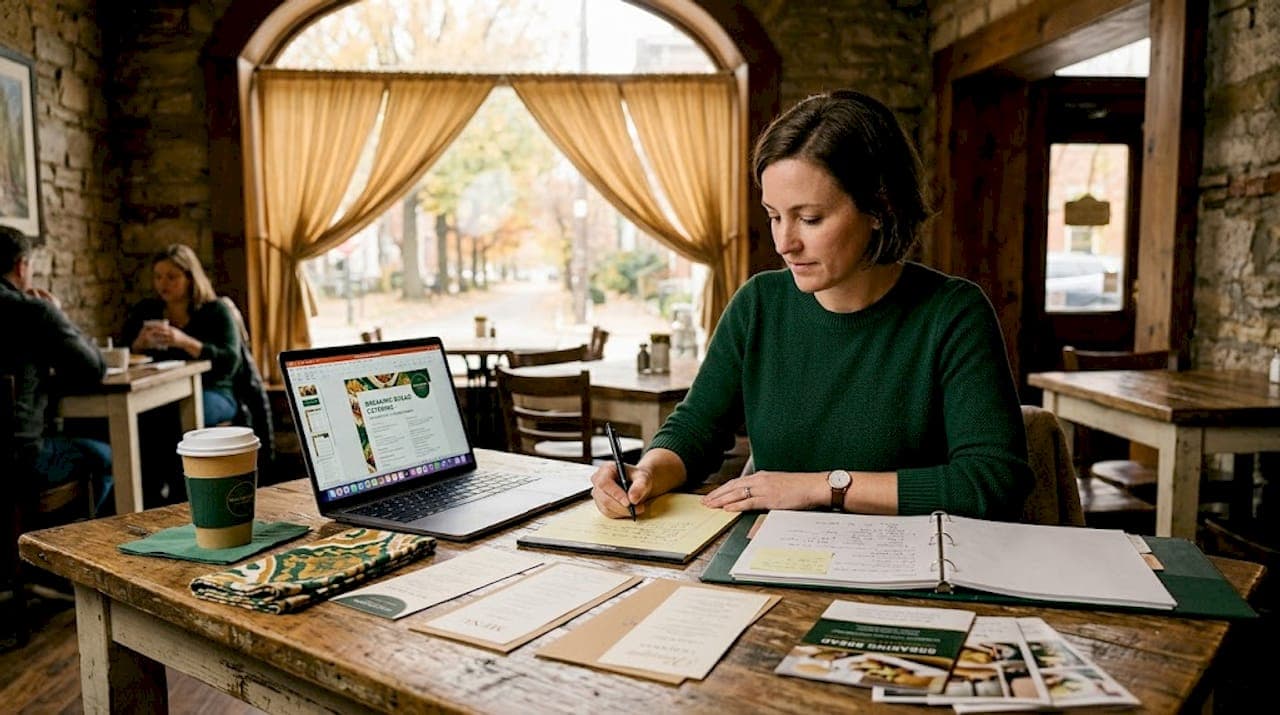
Every corporate event planner in Louisville knows the sinking feeling: the food arrives late, a guest's allergy wasn't flagged, or the buffet has been sitting out too long and no one noticed. When you plan a corporate catering event, the stakes are real. Poor execution reflects on your professionalism, not just the caterer's. This guide walks you through every critical step, from setting a realistic catering budget for your corporate event to managing food safety at the buffet table, so your next gathering runs with the kind of polished confidence your guests will remember.
Table of Contents
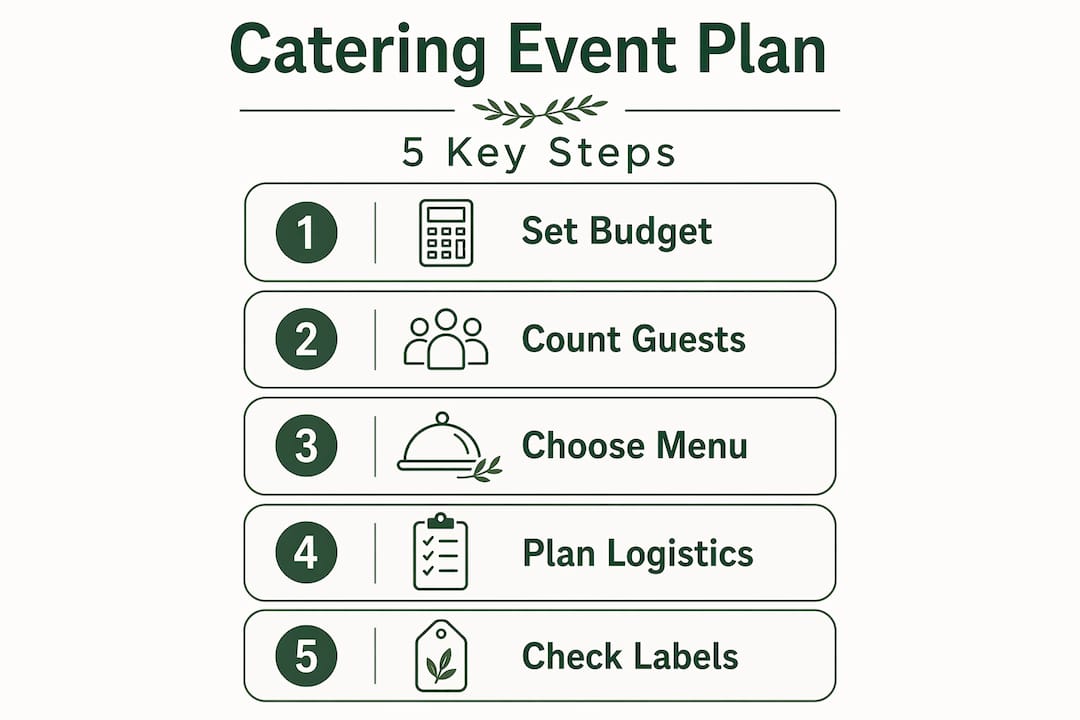
- Understanding your event catering needs and budget
- Managing attendee headcount and dietary requirements
- Selecting menus and service styles to match event goals
- Food safety and temperature guidelines for smooth buffet service
- Planning logistics and day-of-event checklist for flawless execution
- Why meticulous planning and communication separate great corporate catering from mediocre
- Discover top Louisville corporate catering services to elevate your event
- Frequently asked questions
Key Takeaways
| Point | Details |
|---|---|
| Budget allocation | Allocate 30-40% of your total event budget to catering for quality food and service. |
| Accurate headcount | Send early mandatory RSVPs and plan for 5% fewer attendees to reduce waste and cost. |
| Food safety first | Keep hot foods above 135°F and cold foods below 41°F; replace buffet dishes every 2 hours. |
| Service style matters | Choose menus and service approaches that match your event’s tone and logistics. |
| Plan ahead logistics | Order weeks in advance and confirm delivery details to ensure smooth day-of service. |
Understanding your event catering needs and budget
Before you contact a single vendor, you need a clear picture of your event's scope and what you can realistically spend. The type of corporate event shapes everything: a working lunch for 20 people calls for very different catering options than a client appreciation dinner for 150.
Start by identifying your event format. Is this a casual team meeting, a formal board presentation, or a large company-wide celebration? Each scenario has its own appropriate service style, and choosing the wrong one wastes money and creates an awkward guest experience.
Pricing tiers to know before you budget:
| Service style | Typical cost per person | Best suited for |
|---|---|---|
| Drop-off catering | $12-$20 | Working lunches, small team meetings |
| Buffet with attendants | $30-$55 | Mid-size company events, training days |
| Full-service catering | $50-$120+ | Client dinners, formal galas, large events |
According to current industry benchmarks, drop-off catering ranges $12-$20 per person while full-service events run $50 to $120 or more, with experts recommending you allocate 30-40% of your total event budget to food and service. That percentage might feel high until you realize that catering is often the single most memorable element of any gathering.
Key budget line items to factor in beyond food:
- Service fees and gratuities (typically 18-22% added on top)
- Rental equipment: chafing dishes, linens, serving platters
- Staffing for setup, service, and breakdown
- Delivery fees, especially for locations with limited access
- Contingency buffer of 10% for last-minute additions
Pro Tip: When working with Louisville catering services, ask for an all-in quote upfront. Hidden fees for equipment rentals or gratuities can push a $30-per-person estimate to $45 before you know it.
Early budget clarity does more than protect your wallet. It immediately narrows your menu choices, service style, and vendor shortlist, which makes every subsequent planning decision faster and more confident.
Managing attendee headcount and dietary requirements
With your budget framework in place, the next critical step is getting an accurate headcount and understanding exactly who will be eating at your table. These two factors directly control your final order size and your ability to serve every guest with care.
Send RSVPs early and make them mandatory. Vague "let us know if you can make it" invitations produce vague responses. Your RSVP form should specifically ask guests to declare any food allergies, dietary restrictions, or strong preferences. Gluten-free, vegan, halal, and nut-free requirements are common in any group of 20 or more, and catching them early is far cheaper than scrambling the day before.
Best practices for headcount and dietary management:
- Send RSVPs at least 3-4 weeks before the event
- Require guests to specify allergies and dietary needs on the form
- Finalize your headcount 7-10 days before the event and communicate it to your caterer
- Order for roughly 5% fewer guests than your confirmed count to offset no-shows
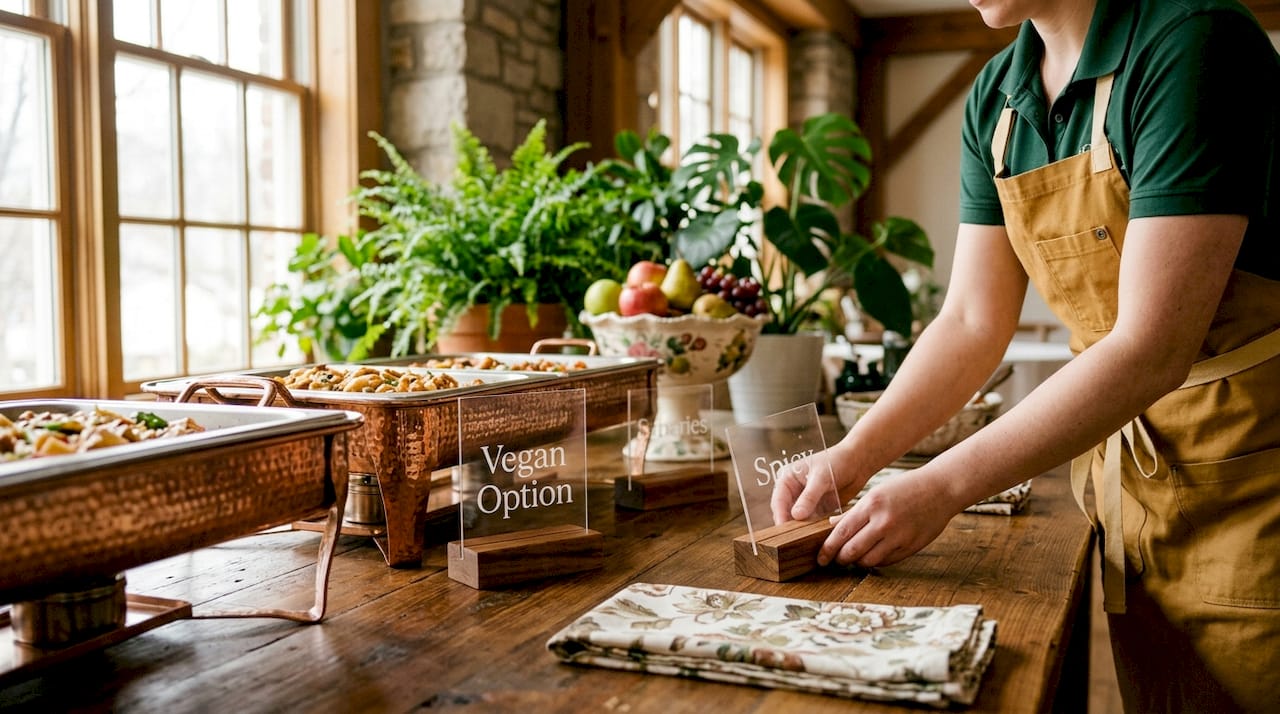
- Clearly label all special dietary meals at the point of service
- Keep a printed list of special meals with guest names for the serving team
That 5% reduction rule is one of the most practical money-saving moves in corporate event catering. If 100 people confirmed but history tells you 5 will cancel, ordering for 95 saves real dollars without leaving anyone hungry.
Pro Tip: When gathering dietary preferences efficiently for larger groups, consider a simple digital form with checkboxes for the most common restrictions. It takes guests 30 seconds and saves you hours of follow-up calls.
Clear labeling at service is non-negotiable. A guest with a severe nut allergy should never have to guess which dish is safe. Labeled meals protect your guests and protect you from liability.
Selecting menus and service styles to match event goals
After confirming your guest list and dietary needs, your menu and service style choices should directly reflect the tone and purpose of your event. A casual Friday team lunch and a formal client dinner are both corporate catering events, but they call for entirely different approaches.
Individually packaged meals offer convenience and safety; buffets provide variety and social interaction. Neither is universally better. The right choice depends on your event's goals, available space, and the experience you want guests to have.
Comparing service styles for corporate events:
| Service style | Pros | Cons | Best event type |
|---|---|---|---|
| Individual packaged meals | Easy portioning, allergy-safe, minimal staff | Less variety, less social | Working lunches, training sessions |
| Buffet | Variety, encourages mingling, flexible | Requires food safety monitoring | Team celebrations, networking events |
| Plated full service | Elegant, controlled portions | Higher cost, needs more staff | Client dinners, formal presentations |
| Food stations | Interactive, memorable | Space-intensive, complex logistics | Large galas, company parties |
When selecting your catering menu and service style, think through these practical factors:
- Space available: Buffets need room for guests to circulate without crowding
- Event timing: A 45-minute working lunch calls for grab-and-go efficiency, not a three-course plated meal
- Mingling goals: If networking is part of the agenda, buffets and stations naturally encourage movement and conversation
- Staffing: Full-service plated meals require trained servers; drop-off catering does not
One often-overlooked consideration is the relationship between your menu and your event's cultural tone. An authentic soul food spread communicates warmth and generosity. An Italian pasta bar signals celebration and abundance. The food you choose tells your guests something about how much you value their presence.
Food safety and temperature guidelines for smooth buffet service
Choosing a buffet is only half the decision. The other half is managing it safely throughout the event. This is the area where even experienced planners make costly mistakes, and where the consequences go beyond inconvenience.
The core concept to understand is the temperature danger zone: the range between 41°F and 135°F where bacteria multiply rapidly. Every minute food sits in that range is a risk, and FDA Food Code requires hot foods held at 135°F or above and cold foods at 41°F or below, with perishables discarded after 2 hours in the danger zone (or just 1 hour if the ambient temperature exceeds 90°F).
"Bacteria can double every 20 minutes in the danger zone, making time monitoring essential for buffets." This is why the 2-hour rule is non-negotiable at any corporate catering event.
Food safety checklist for buffet service:
- Keep hot foods at or above 135°F using chafing dishes with sterno fuel or electric warmers
- Keep cold foods at or below 41°F using ice beds or refrigerated display units
- Replace buffet dishes every 2 hours with fresh ones from hot or cold holding; never top off an existing dish
- Use a separate serving utensil for every dish to prevent cross-contamination
- Assign one staff member specifically to monitor time and temperature throughout service
- Discard any dish that has been in the danger zone for more than 2 hours without exception
Pro Tip: Set a phone timer for every 90 minutes, not 2 hours. That buffer gives you time to swap dishes before the deadline, not after. One overlooked tray of chicken can turn a celebrated event into a health incident.
Buffet service done right is genuinely impressive. Buffet service done carelessly is a liability. The difference is almost entirely about discipline and monitoring.
Planning logistics and day-of-event checklist for flawless execution
Even the most exquisite menu falls flat if the logistics break down. The day-of experience is shaped almost entirely by decisions made weeks before the event.
Ordering and booking timeline:
- Book your caterer and confirm your menu 2-4 weeks before standard events
- For holiday gatherings or large-scale events, secure your caterer 1-2 months in advance to ensure availability
- Finalize headcount and dietary requirements 7-10 days out
- Confirm delivery logistics (parking, building access, elevator use, drop-off point) 5-7 days before
- Send a written confirmation of the full order, including special meals, to your caterer 48 hours ahead
Day-of delivery checklist:
- Greet the delivery team and walk them through the setup area layout
- Cross-check every item on the invoice against what was delivered, including serving utensils and labeled special meals
- Verify that chafing dishes, tongs, and serving spoons are present before the team leaves
- Confirm that special dietary meals are clearly labeled and separated from standard items
- Do a final temperature check on hot and cold items before guests arrive
- Assign cleanup responsibilities and timing before service begins
| Task | Timing | Owner |
|---|---|---|
| Caterer booking confirmed | 2-4 weeks out | Event planner |
| Headcount finalized | 7-10 days out | Event planner |
| Delivery logistics confirmed | 5-7 days out | Event planner |
| Invoice cross-check | Day of, on delivery | Event planner or assistant |
| Temperature monitoring | Throughout service | Designated staff member |
| Cleanup and breakdown | Post-event | Catering team or venue staff |
Pro Tip: For a corporate catering logistics guide you can reuse across events, build a master checklist in a shared document and update it after each event with lessons learned. Over time, this becomes one of the most valuable tools in your planning toolkit.
Why meticulous planning and communication separate great corporate catering from mediocre
Here is something we have observed time and again: the events that go wrong rarely fail because of bad food. They fail because of a gap between what was communicated and what was assumed.
A caterer who was never told about the gluten-free attendees cannot be blamed for not accommodating them. A delivery driver who was never given parking instructions cannot be faulted for arriving 40 minutes late. The 2-hour food safety rule only protects your guests if someone is actually watching the clock. These are not catering failures. They are communication and planning failures wearing a catering costume.
We also believe that Louisville planners have a genuine advantage when they work with local corporate catering expertise. Local caterers understand the city's event venues, the rhythm of Louisville's corporate calendar, and the regional food preferences that make a meal feel personal rather than generic. That knowledge cannot be replicated by a national chain fulfilling orders from a central kitchen.
The planners who consistently execute exceptional corporate catering events share one trait: they treat catering as a hospitality experience, not a procurement task. They invest time in the relationship with their vendor, communicate early and specifically, and build systems (checklists, timelines, confirmation calls) that remove ambiguity. The food becomes the centerpiece of the event, not an afterthought, and guests feel the difference.
Discover top Louisville corporate catering services to elevate your event
You now have a complete framework to plan a corporate catering event with confidence, from budgeting and dietary management to food safety and day-of logistics. The next step is finding the right culinary partner to bring it all to life.
At Breaking Bread Catering, we bring the warmth of authentic Italian cuisine and soulful Southern cooking to Louisville's corporate gatherings, with menus designed to nourish community and leave a lasting impression. Whether you need a convenient drop-off lunch or a fully staffed event experience, explore our Louisville corporate catering menu to find the right fit for your next event. Browse our full range of Louisville catering services or consider a private chef dining in Louisville experience for your most exclusive gatherings. We handle the details so you can focus on your guests.
Frequently asked questions
How far in advance should I book catering for a corporate event in Louisville?
For standard events, book catering 2-4 weeks ahead; for large or holiday events, secure your caterer 1-2 months in advance to ensure availability and smooth planning.
What percentage of the event budget should be allocated to catering?
Industry experts recommend allocating 30-40% of your budget to catering food and service to ensure a high-quality dining experience that reflects well on your organization.
How can I ensure food safety when serving buffet-style catering?
Maintain hot foods at 135°F or above and cold foods at 41°F or below; replace buffet dishes every 2 hours and use separate utensils for each dish to prevent foodborne illness.
How do I accurately plan for dietary restrictions in my corporate catering order?
Send mandatory RSVPs that require guests to specify allergies and dietary needs, then finalize requirements 7-10 days before the event and communicate them directly to your caterer in writing.
What common oversights should I avoid when planning corporate catering?
Avoid skipping delivery logistics confirmation and forgetting to verify serving utensils on arrival; missing tongs or labels can halt service and create safety risks before a single guest is served.