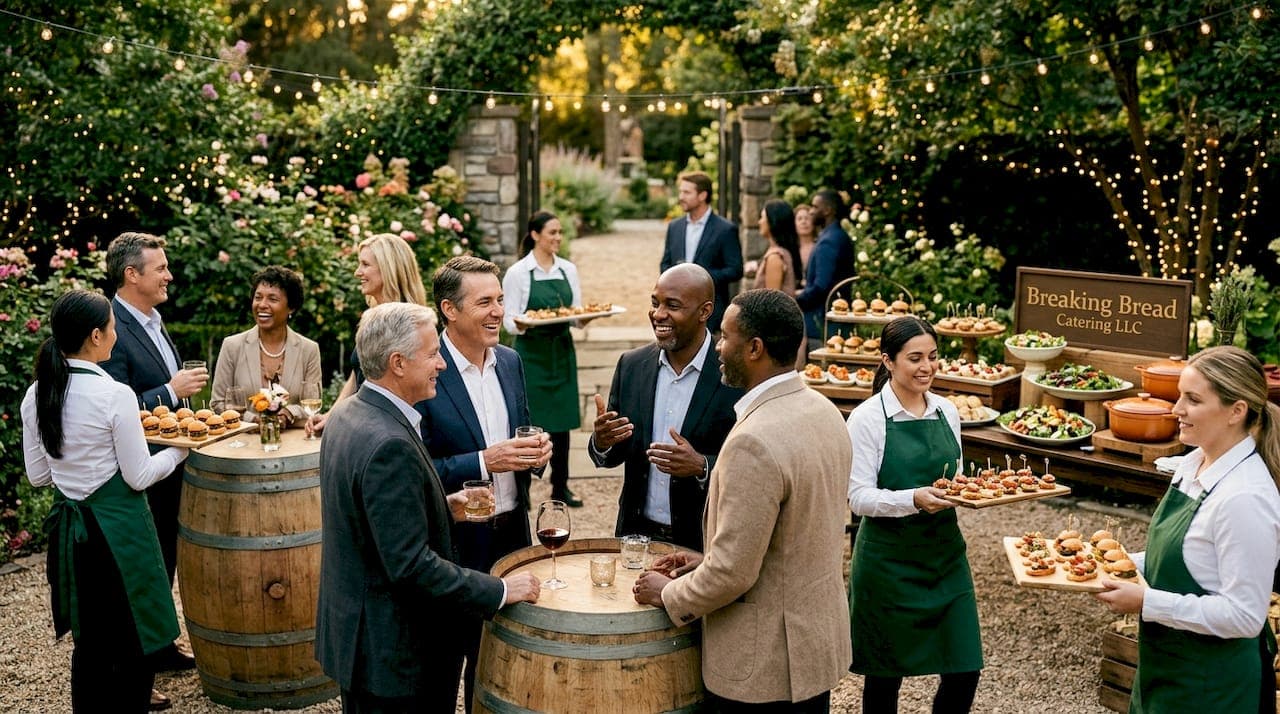
Reception style event catering is one of the most misunderstood formats in event planning. Many people assume it means a few trays of appetizers at a cocktail hour. The reality is far richer. What is a reception style event catering setup? It's a fully realized dining experience built around guest movement, social interaction, and flexible service. Rather than seating everyone at assigned tables for a plated dinner, reception style catering distributes food across stations, passed trays, and buffet displays. The result is an atmosphere that feels alive, communal, and welcoming. For weddings, corporate gatherings, and private parties alike, understanding this format changes how you plan everything.
Table of Contents
- Key takeaways
- What reception style event catering actually means
- Reception style vs. banquet and plated dining
- Benefits and challenges of reception style catering
- How to plan reception style catering that works
- Reception catering trends worth knowing in 2026
- My honest take on reception style catering
- Bring your reception to life with Isyouhungry
- FAQ
Key takeaways
| Point | Details |
|---|---|
| Reception style is not cocktail hour | It's a complete dining format with stations, buffets, and passed service designed for full events. |
| Cost savings are real | Buffet and station formats average around $27 per person versus $40 for plated meals. |
| Flow management matters | Active station management and replenishment are critical to keeping guests happy and lines short. |
| Flexible for many event types | This format suits weddings, corporate events, and social gatherings where socializing is a priority. |
| Menu customization drives impact | Interactive stations like taco bars and build-your-own setups make events feel personal and memorable. |
What reception style event catering actually means
At its core, reception style event catering replaces the traditional sit-down, course-by-course dinner with a format centered on choice and movement. Guests are not assigned seats waiting for a server to deliver their plate. Instead, they move through the event space, visiting stations, sampling passed bites, and eating at their own pace. The right catering style depends on the event's nature, guest profile, and timing. Reception catering works because it aligns with how people naturally want to socialize.
Several distinct service formats fall under the reception catering umbrella:
- Buffet tables: Long displays where guests serve themselves from hot and cold options, including carving stations and themed spreads.
- Food stations: Dedicated stations built around a single concept. Think a taco bar, a pasta station, or a build-your-own slider setup. These create natural conversation points in the room.
- Passed hors d'oeuvres: Servers circulate through the crowd carrying trays of bite-sized foods. Shrimp cocktail, bruschetta, bacon-wrapped scallops. These keep energy high without requiring guests to move.
- Cocktail-style setups: A combination of light bites, small plates, and drinks distributed throughout the space with minimal formal seating. High-top tables and lounge areas replace traditional dining setups.
- Action stations: Live-cooking stations where a chef prepares food in front of guests. Stir-fry stations, crepe bars, and carving stations fall into this category.
The social benefit here is significant. Reception catering encourages continuous circulation of food, allowing guests to eat without interrupting conversations. The layout actively supports mingling rather than forcing people to stay put for 90 minutes while courses arrive. For any event where connection is the goal, this format delivers.
Reception style vs. banquet and plated dining
Understanding what sets reception style catering apart from formal plated dinners helps you make a smarter decision for your event. These two formats serve genuinely different purposes, and choosing the wrong one for your crowd can affect the entire atmosphere.
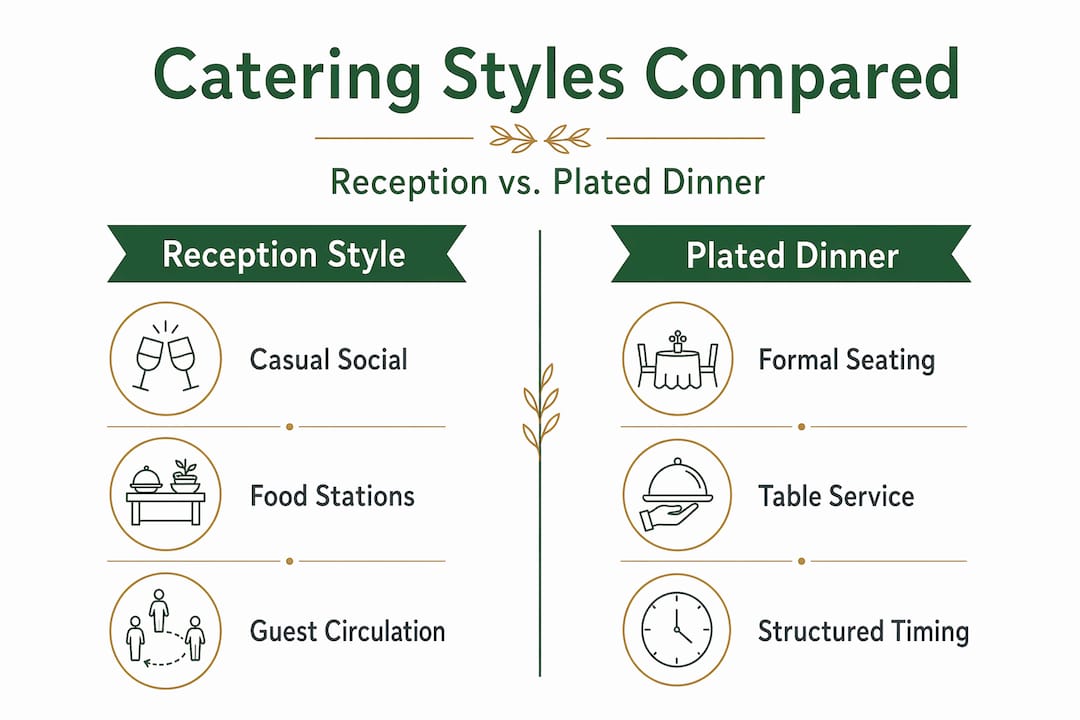
| Feature | Reception style | Plated/banquet dinner |
|---|---|---|
| Formality | Relaxed, social, informal | Formal, structured, ceremonial |
| Average cost per person | Around $27 | Around $40 |
| Staffing required | Fewer servers needed | High server-to-guest ratio |
| Guest experience | Flexible, self-paced, social | Controlled, consistent, seated |
| Timing flexibility | High. Guests eat when ready | Low. Courses follow strict schedule |
| Best suited for | Weddings, networking events, parties | Awards dinners, galas, formal ceremonies |
Plated sit-down service offers control and consistency, and it creates structured pauses well suited for speeches or presentations. However, it demands more staffing, tighter timing, and a less relaxed atmosphere. Corporate awards nights and black-tie galas often call for it. But for a wedding where you want your guests genuinely enjoying each other's company, or a product launch where networking is the point, reception style catering is the stronger fit.
Pro Tip: If your event includes a keynote speech or a formal program segment, consider a hybrid approach. Use reception style catering for the first 90 minutes, then bring guests to seats for the program with a brief dessert course. You get the social energy of reception catering and the control of a structured moment.
The cost difference is worth taking seriously. For 150 guests, the gap between a plated dinner and a buffet-style reception can exceed $1,900 based on the per-person averages above. That budget can fund upgraded florals, a better bar program, or an additional food station.

Benefits and challenges of reception style catering
Reception style catering has a lot going for it. But it's not without operational complexity. Knowing both sides helps you plan with your eyes open.
The real advantages:
- Cost efficiency: Interactive stations like taco bars and build-your-own setups can be significantly more budget-friendly than traditional plated entrées, while still delivering a high-end feel.
- Reduced table rental costs: Fewer formal place settings, fewer tables, and less linen rental. Reception setups can trim your rental budget considerably.
- Guest-driven pacing: People eat when they're hungry, not when the kitchen is ready. That reduces stress for both guests and the catering team.
- Natural atmosphere: The room feels alive and energetic. Guests are moving, talking, and discovering food together. That energy is hard to manufacture with a seated dinner.
- Dietary flexibility: Stations and buffets make it easier to offer clearly labeled dietary options without drawing attention to individual guests with special needs.
The challenges to plan for:
- Queue management: Without thoughtful station placement, bottlenecks form. Thirty guests crowding one taco station is a flow problem, not a food problem.
- Food availability gaps: If replenishment is not active and attentive, popular items run out. Managing food replenishment and service flow is one of the most critical jobs your catering team handles during the event.
- Food temperature control: Buffet and station food must be maintained at proper temperatures. A great crab dip served lukewarm is a disappointment.
- Guest coverage in large spaces: In a sprawling venue, passed hors d'oeuvres must reach every corner of the room, not just the dance floor.
Pro Tip: Ask your caterer how they handle station replenishment during the event. The best catering teams aim for invisibility. Guests should never notice the moment a tray was swapped out or a station was restocked. If your caterer can't describe their replenishment protocol clearly, that's worth discussing before you sign a contract.
How to plan reception style catering that works
Good reception style catering does not happen by accident. The execution depends on thoughtful planning across several areas.
-
Clarify your event's purpose first. A networking-heavy corporate event, a wedding reception, and a birthday party all have different guest behaviors and timing needs. Your catering format should serve the event's core purpose.
-
Match your menu to the format. Not every dish works as a station item or a passed bite. Finger foods, small plates, and items that are easy to eat while standing translate beautifully to reception setups. Dishes requiring knives, full plates, or complex plating are better suited for seated service.
-
Plan station placement strategically. Spread stations throughout your venue rather than clustering them in one area. This distributes guest traffic naturally. Place higher-demand stations like a carving station or slider bar near room entrances so guests engage with food immediately upon arrival.
-
Use a hybrid station model for cost control. Stationary displays for less expensive items like cheese boards, crudité, and fruit, combined with passed service for premium items like shrimp cocktail or scallops, creates a perception of abundance while managing your budget precisely.
-
Account for dietary restrictions at every station. Label every item clearly with common allergens. Offer at least one vegetarian and one gluten-friendly option at each station so no guest feels limited. This is basic hospitality, and your guests will notice it.
-
Coordinate timing with your event program. Reception catering works best when food circulation aligns with natural energy shifts in the event. Open stations as guests arrive, increase passed items during high-energy moments, and transition to a dessert station as the evening winds down.
For corporate events, review the event and corporate catering menu options that reflect both the professional tone and the community-centered spirit of the gathering.
Reception catering trends worth knowing in 2026
The reception catering landscape in 2026 is more creative and personalized than ever. Here is what is resonating with guests right now:
- Fusion cuisine stations: Korean BBQ tacos, Southern-Italian pasta bars, jerk chicken with house-made pita. Blending culinary traditions at a single station generates genuine excitement and reflects the authentic character of the host's background.
- Interactive build-your-own bars: Mac and cheese bars, taco stations, and sushi stations give guests agency over their meal. Customization feels personal, and guests remember the experience.
- Late-night snack stations: A late-night bite has become one of the most talked-about moments at receptions. Mini grilled cheese, fries in paper cones, and loaded nachos. Simple food served at the right moment creates outsized joy.
- Creative dessert displays: Dessert tables with themed décor, seasonal flavors, and interactive elements like a s'mores station bring visual and culinary delight to the end of the evening.
- Food trucks integrated into the venue: Food trucks offer fresh made-to-order food with their own kitchen and staff. Positioning one outside the venue for the last hour of a reception has become a memorable touch that guests photograph and share.
- Culturally specific menus: Events are increasingly featuring the host's heritage through food. Soul food spreads, authentic Italian antipasto tables, or regional specialties make reception catering feel like a genuine expression of identity rather than generic event food.
My honest take on reception style catering
I've worked with enough events to say this with confidence: the format of your catering shapes the personality of your event more than almost any other decision you'll make.
I've seen beautifully decorated venues feel stiff and awkward because guests were locked into assigned seats for a three-course dinner. I've also seen modest venues come alive because the catering team placed stations thoughtfully, passed food generously, and gave guests room to breathe and connect. The food was the event.
What most event planners underestimate is the role of flow management. You can have an exquisite menu and still create a frustrating experience if guests are standing in a 20-person queue at one station while another station sits untouched across the room. I always encourage clients to walk their venue with their caterer before the event and physically map where each station goes and how guests will move between them.
The other thing I've learned: communicate your timeline to your catering team with specificity. Not just "the event starts at 6." Give them your entire program so they can plan food circulation around your event's rhythm. The best catering teams aim to be invisible. When they're doing their job well, guests feel like the food is just magically appearing. That's the goal.
Reception style is genuinely the right choice for most modern events. It honors the way people actually want to eat together. And when it's executed with care, it feels less like a service and more like an act of hospitality.
— Tyree
Bring your reception to life with Isyouhungry
At Isyouhungry, we believe food is an act of togetherness and love. If you're planning a reception, wedding, corporate event, or private party in Louisville, our team at Breaking Bread Catering is ready to help you build a catering experience your guests will talk about long after the evening ends.
From interactive taco bars and soul food spreads to authentic Italian pasta stations, our Louisville catering services are designed to reflect your event's personality with meticulous attention to flavor and flow. We offer reception setup consultation, customized menus, and full event support to make your planning process feel effortless. Want something truly bespoke? Our private chef services add a personal, elevated touch to any reception. Reach out today and let's build something delicious together.
FAQ
What is reception style event catering?
Reception style event catering is a service format where food is served through buffet tables, food stations, and passed trays rather than plated individually at the table. It emphasizes guest movement, social interaction, and flexible dining paced by the guests themselves.
How much does reception style catering cost compared to plated dinners?
Reception style catering typically costs around $27 per person on average versus approximately $40 per person for a formal plated dinner, making it a meaningfully more budget-friendly option for most events.
What types of events work best with reception style catering?
Reception catering works best for weddings, corporate networking events, cocktail parties, and social gatherings where guests prioritize mingling and interaction over a structured dining experience.
How do you prevent long lines at food stations?
Spread stations throughout the venue rather than concentrating them in one area, and have your catering team actively manage replenishment and flow. Mirror popular stations on opposite sides of the room to distribute guest traffic evenly.
What is the difference between a buffet and a food station at a reception?
A buffet is a single display with multiple dishes guests serve themselves from, while a food station is a dedicated setup built around one concept, such as a taco bar or pasta station, often staffed by a chef or server.